By: Patrick Payne
March 20, 2026
Commercial trucks operate under demanding conditions, transporting heavy loads across long distances while maintaining tight schedules. Over time, this constant strain places stress on engines, braking systems, steering components, and electrical systems. Recognizing the following warning signs can help determine when it’s time to schedule an inspection with a professional truck repair shop before problems escalate.
1. Unusual Engine Noises
Engines in commercial trucks are built to handle heavy workloads, but they often signal problems through unusual sounds. Rattling noises may indicate loose components, worn engine mounts, or debris circulating within the engine compartment. While these sounds might seem minor initially, they often point to early mechanical wear that requires inspection by a truck repair shop.
Hissing or sizzling noises can indicate fluid leaks or overheating components. These sounds may occur when coolant escapes from damaged hoses or when pressurized systems release steam due to high engine temperatures. If the cause is not diagnosed promptly, overheating can lead to significant internal engine damage.
Knocking or pinging sounds during acceleration often indicate combustion-related issues. Improper ignition timing, worn pistons, or low-quality fuel can disrupt the combustion process, reducing engine performance and efficiency. Similarly, loud exhaust noises may signal leaks in the exhaust system or damage to the muffler, both of which can affect emissions and engine operation.
Another common issue is high-pitched squealing, typically caused by worn belts. When belts deteriorate, they may slip or fail, disrupting vehicle operation. Corrosion can further accelerate these mechanical problems. According to Market Report Analytics, 70% of fleet operators cite corrosion as a top maintenance issue. Regular inspections at a reputable truck repair shop help identify the root causes behind these noises before they lead to serious engine damage.
2. Reduction in Fuel Efficiency
A noticeable decline in fuel efficiency is often one of the earliest signs that a commercial truck requires professional attention. When miles per gallon begin to drop significantly, it typically indicates underlying issues affecting combustion efficiency or engine performance.
One common cause is malfunctioning fuel injectors. Injectors regulate the amount of fuel delivered to the combustion chamber, and when they become clogged or worn, the fuel-air mixture becomes unbalanced. This results in inefficient combustion, increased fuel consumption, and reduced engine power. A truck repair shop can perform diagnostic tests to determine whether injectors require cleaning or replacement.
Fuel leaks are another potential source of reduced efficiency. Even small leaks can waste significant amounts of fuel over time while also creating safety hazards. Leaks may occur in fuel lines, pumps, or connections, and they often go unnoticed until fuel consumption increases or strong fuel odors become noticeable.
Airflow restrictions can also affect fuel economy. Dirty or clogged air filters reduce the amount of clean air entering the engine, disrupting the precise balance needed for efficient combustion. When airflow is restricted, the engine must work harder to maintain performance, resulting in higher fuel consumption.
Routine inspections performed by a dependable truck repair shop help detect these issues early. By identifying the source of declining fuel efficiency, technicians can restore engine performance while preventing further mechanical stress.
3. Fluid Leaks
Commercial trucks rely on multiple fluid systems to operate safely and efficiently. When leaks develop, they often signal worn seals, damaged hoses, or failing components.
Oil leaks are concerning because they directly affect engine lubrication. When oil levels drop, friction between internal components increases, generating excessive heat and wear. Over time, this can result in severe engine damage or complete engine failure. A truck repair shop can locate the source of the leak and replace any damaged components before further damage occurs.
Coolant leaks are another serious concern. Coolant regulates engine temperature, and when levels drop, the engine can quickly overheat. Leaks may develop in hoses, the radiator, or even the engine block. Overheating not only reduces performance but can also cause permanent internal damage.
Brake fluid leaks present one of the most dangerous situations for commercial vehicles. Because braking systems rely on hydraulic pressure, fluid loss can reduce stopping power and increase the risk of accidents. Transmission fluid leaks can also cause major performance issues, including slipping gears and delayed shifting.
4. Brake Problems
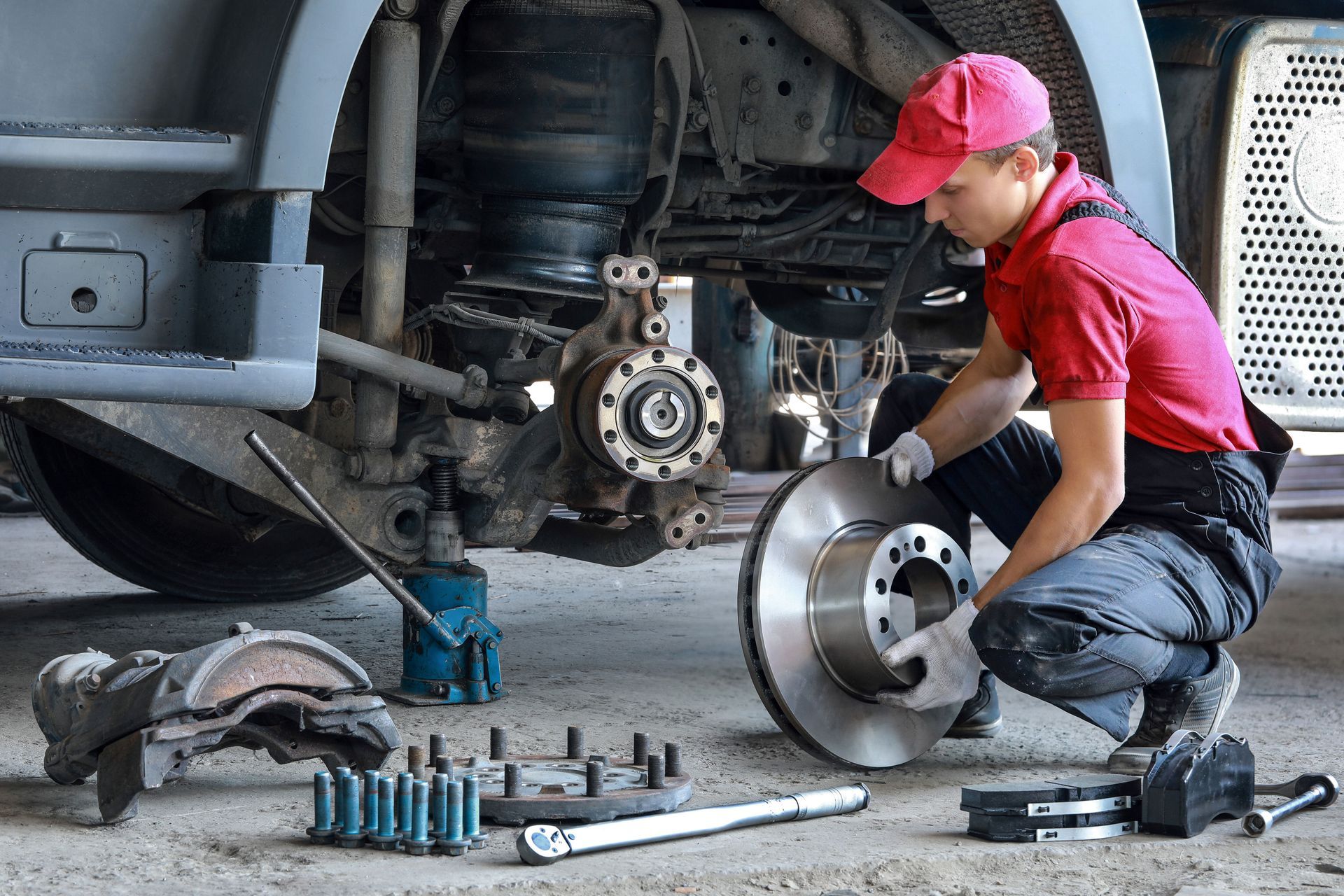
Squeaking or squealing sounds during braking often indicate worn brake pads. As pads wear down, metal components may begin contacting the rotor surface, producing noise and reducing braking effectiveness. If the issue is ignored, rotors may sustain damage and require more extensive repairs. A truck repair shop can inspect the braking system and replace worn components before they compromise safety.
Drivers may also notice vibrations or pulsations when applying the brakes. These sensations are often felt through the steering wheel or brake pedal and usually indicate warped rotors. Warped rotors reduce braking efficiency and can lead to uneven wear across the system.
Another warning sign is a spongy or soft brake pedal. This issue can occur when air enters the brake lines or when brake fluid leaks from the system. Both situations reduce the hydraulic pressure required for effective braking and require immediate inspection.
Dashboard warning lights should also never be ignored. Modern commercial trucks use monitoring systems that detect irregularities within the braking system. When these alerts appear, visiting a truck repair shop allows technicians to diagnose the problem and restore proper braking performance before a serious failure occurs.
5. Steering and Handling Issues
Steering and handling play a vital role in maintaining control of large commercial vehicles. When drivers notice changes in steering responsiveness or vehicle stability, these symptoms often indicate issues within the steering or suspension systems.
Difficulty turning the steering wheel—particularly during low-speed maneuvers—often points to power steering system problems. Low power steering fluid, failing pumps, or damaged hoses can reduce steering responsiveness. If left unresolved, these issues can lead to complete steering failure. A truck repair shop can inspect the power steering system and restore proper functionality.
Steering wheel vibrations are another common warning sign. These vibrations may result from wheel alignment problems, unbalanced tires, or worn suspension components. Misalignment can also cause uneven tire wear, increasing maintenance costs over time.
Drivers may also notice that the vehicle pulls to one side while driving. This symptom frequently indicates alignment issues or uneven braking pressure between wheels. In other cases, worn suspension components may be responsible.
Whining noises when turning the steering wheel often indicate low power steering fluid or a failing power steering pump. Because steering stability is essential for safe operation, these issues should be evaluated promptly by technicians at a truck repair shop.
6. Electrical System Malfunctions
Modern commercial trucks rely heavily on electrical systems to power essential components such as sensors, lighting, engine controls, and communication equipment. When electrical problems develop, they can disrupt multiple vehicle systems simultaneously.
Dim or flickering lights are often the first indication of electrical trouble. These symptoms typically point to battery issues, failing alternators, or poor electrical connections. Reduced lighting can compromise visibility and create safety hazards, particularly during nighttime driving.
Frequent battery failure or difficulty starting the engine may also indicate alternator problems. The alternator is responsible for charging the battery while the engine runs. When it begins to fail, electrical systems gradually lose power, leading to starting issues and unreliable performance.
Blown fuses and malfunctioning sensors may indicate deeper electrical problems, such as wiring damage or short circuits. Faulty sensors can disrupt engine management systems and cause inaccurate readings that affect overall performance.
Corrosion can also contribute to electrical failures. Moisture and road conditions often cause corrosion to form on battery terminals and connectors, interrupting electrical flow. Routine inspections and maintenance performed by a truck repair shop help detect corrosion and electrical issues before they result in unexpected breakdowns.
Commercial trucks are built to handle demanding workloads, but constant operation inevitably leads to wear across key systems. Addressing these problems early helps prevent costly breakdowns, improves safety, and keeps trucks operating efficiently. If your commercial vehicle is showing any of these warning signs, schedule a professional inspection with BTR Trucks & Service to keep your fleet operating safely and efficiently. Our truck repair shop is here to help with your commercial truck repair needs!